

What Is HHC? Properties, Uses, and Everything You Need to Know
What is the main difference between Indica vs Sativa?
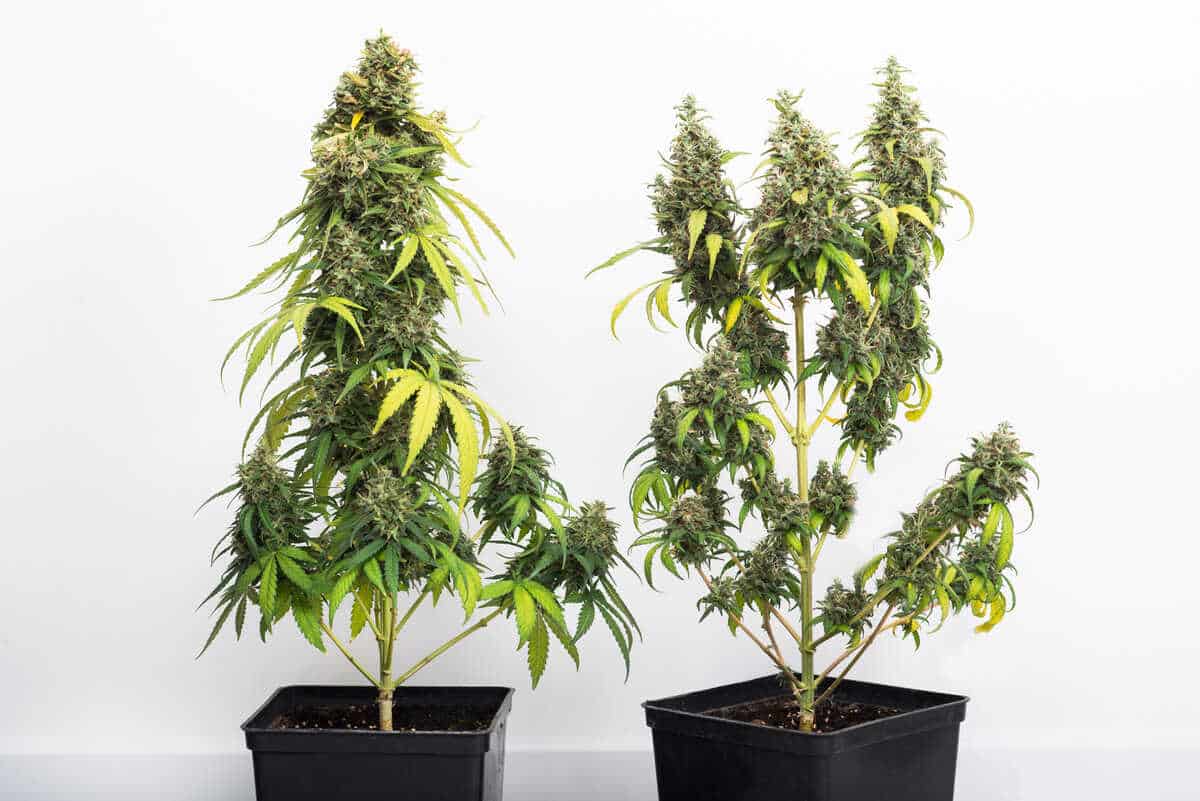
To give you the most direct answer, the primary physical difference between Indica vs Sativa lies in their growth structure: Indica plants grow short, bushy, and dense with wide leaves, whereas Sativa plants grow tall, slender, and lanky with narrow, delicate leaves.
When growers and consumers ask about pot indica vs sativa, they are looking at thousands of years of geographical adaptation. Indicas originated in the harsh, dry, mountainous regions of Central Asia (such as the Hindu Kush mountain range), forcing them to evolve thick stems and compact structures to survive harsh winds and cold climates.
Conversely, Sativas evolved in humid, tropical regions near the equator (such as Colombia, Thailand, and South Africa). Their tall, airy stature and narrow leaves evolved specifically to maximize sunlight exposure while allowing heavy tropical rainfall and humidity to pass through without rotting their flowers.
Despite their vastly different physical appearances, both varieties belong to the exact same scientific species: Cannabis sativa L.
From a purely biological perspective, they share almost identical cellular DNA, internal vascular structures, and metabolic processes. Here is what connects them under the surface:
-
Reproductive Biology: Both varieties are dioecious, meaning individual plants are naturally either male or female.
-
Chemical Factories: Both possess specialized glandular structures called trichomes, which produce the plant’s resin, cannabinoids, and aromatic terpenes.
-
Photoperiod Sensitivity: Both varieties respond to shifts in daylight hours, transitioning from their vegetative phase to their flowering stage as the days grow shorter in late summer.
Essentially, Indica and Sativa are simply distinct sub-species or “landraces” that adapted differently to their local environments over centuries of evolution.
Leaf anatomy: How to identify a Sativa vs Indica plant at first glance
If you walk into a garden or nursery, the easiest way to perform a sativa vs indica plant identification test is to examine the fan leaves. The leaves act as the solar panels of the plant, and their shape tells you everything about where the strain’s genetic lineage originated.
Characteristics of the Indica leaf
The Indica leaf is built for efficiency in cold, sunny environments. It features exceptionally broad, thick, and overlapping fingers (leaflets) attached to a short petiole (leaf stem).
The color is typically a deep, dark forest green due to high concentrations of chlorophyll. This darker pigmentation allows the plant to absorb as much heat and light as possible during short growing seasons in mountainous altitudes.
Characteristics of the Sativa leaf
The Sativa leaf, by contrast, looks delicate, elegant, and light. It features long, narrow, and widely spaced fingers that rarely touch one another.
Sativa leaves are typically a much lighter, lime-green shade. The reduced leaf surface area prevents the plant from overheating in intense tropical heat and allows air to flow freely through the canopy, preventing mold and mildew in humid weather.
Cultivation patterns: Differences in plant growth and structure
Beyond the shape of a single leaf, the way these two sub-species grow from a tiny seedling into a mature, flowering plant requires completely different cultivation strategies.
| Growth Trait | Indica Varieties | Sativa Varieties |
| Plant Height | Compact & short (typically 3–6 feet) | Tall & towering (can exceed 12+ feet) |
| Branching Style | Dense, Christmas-tree shape | Open, lanky, and spreading |
| Flowering Time | Fast (7 to 9 weeks) | Slow (10 to 16 weeks) |
| Bud Density | Heavy, firm, and tightly packed | Light, airy, and fluffy (“foxtailed”) |
| Climate Preference | Dry, cooler, continental climates | Warm, sunny, tropical climates |
Plant architecture, height, and stretching
An Indica plant grows like a compact shrub. It focuses its energy on developing a sturdy central stalk with short internodal spacing (the distance between branches). This creates a dense, conical shape resembling a miniature Christmas tree.
A Sativa plant grows like a tree or vine. During its transition into the flowering phase, a Sativa undergoes a massive “stretch,” often doubling or tripling in height in just a few weeks. Its internodal spacing is wide, resulting in long, flexible branches that sway easily in the tropical breeze.
Flowering cycles and climate adaptation
Because Indica plants originated in regions with short summers and early winters, they are programmed to finish their lifecycle as quickly as possible. Their flowering phase lasts only 7 to 9 weeks, producing dense, heavy buds that dry out quickly in low humidity.
Sativa plants come from regions near the equator where daylight hours remain roughly consistent year-round. As a result, they take their time, requiring anywhere from 10 to 16 weeks to fully mature. Their buds are lighter and less dense, an evolutionary trait designed to allow air movement through the flower heads in humid jungle climates.
The industry shift: Terpenes, cannabinoids, and the modern profile
For decades, the golden rule of the counter was simple: Indicas offer a relaxing body feel, while Sativas deliver an energetic mental buzz. While that framework made buying easy, modern botanical science has revealed a much more complex reality regarding the effects of indica vs sativa.
Today, due to decades of cross-breeding, almost every commercial strain on the market is a hybrid. True 100% pure landrace Indicas or Sativas are exceptionally rare.
More importantly, scientists now know that the shape of the plant’s leaves doesn’t dictate its mental or physical effects. Instead, those effects are driven by the plant’s unique chemical cocktail:
-
Terpenes: The aromatic essential oils responsible for the plant’s smell and flavor (such as Myrcene, Limonene, and Caryophyllene).
-
Minor Cannabinoids: Compounds like CBG, CBN, and CBC that work alongside THC and CBD.
-
The Entourage Effect: The synergistic biological reaction created when cannabinoids and terpenes work together in the body.
For instance, a plant with a classic “Sativa” physical structure can actually produce high levels of Myrcene—a terpene known for deep relaxation—resulting in a heavy, couch-locking sensation despite the plant looking like a tall tropical tree.
Understanding the structural differences between Indica and Sativa gives you a deeper appreciation for the incredible diversity of the natural world. Whether you are inspecting the broad leaves of a mountain-born Indica or admiring the towering height of a tropical Sativa, each structure tells a story of survival, climate adaptation, and botanical evolution.
At Smoking, we believe that appreciating the fine details elevates every session. The next time you sit down to break down your favorite strain and roll up, take a second to look at the structure, admire the craft, and enjoy the ritual your way.