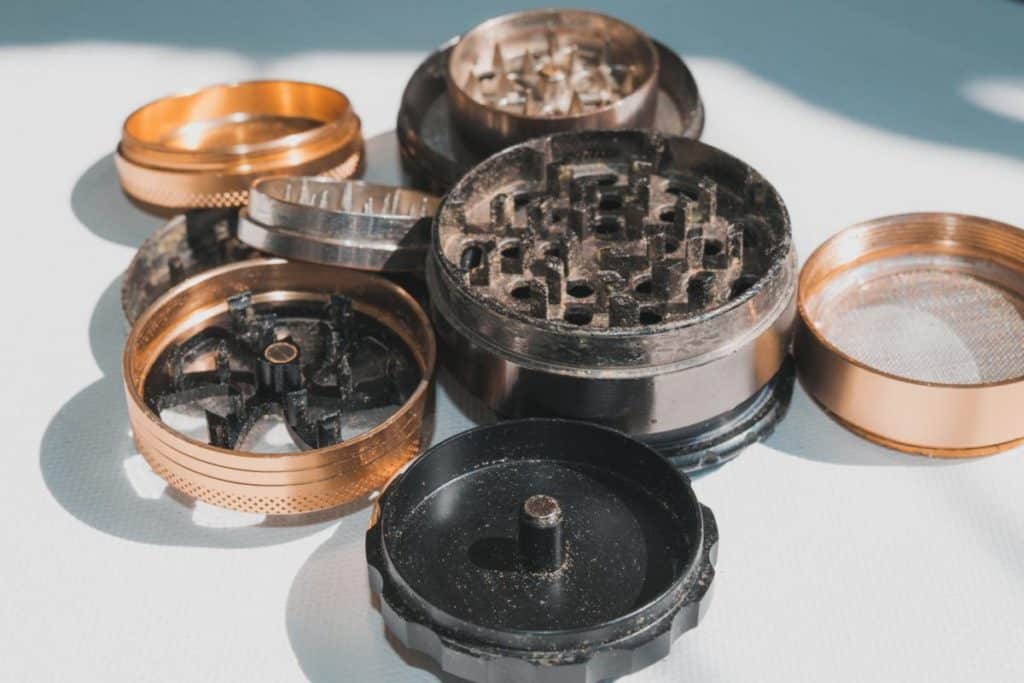


Types of Grinders: Which One Is Best, and How Do They Differ?
How to Distinguish between different types of marijuana leaves based on their strain?
To give you the most direct answer, you can tell the difference between marijuana leaves by examining their width, leaflet count, and shade of green:
- Sativa leaves are long, slender, and light green
- Indica leaves are short, broad, and dark forest green
- Ruderalis leaves are small with few leaflets
- Hybrids showcase a blend of these traits.
Visual inspection of fan leaves serves as a reliable field test. These physical differences evolved over thousands of years as wild landrace strains adapted to wildly different climates—from humid equatorial jungles to freezing Asian mountain ranges.
Types of marijuana leaves and their botanical differences
The physical shape, or morphology, of a leaf reveals its evolutionary lineage. Botanists divide cannabis leaf types into four main categories.
Sativa marijuana leaves: slender, thin, and elongated
Sativa leaves feature exceptionally long, narrow leaflets (fingers) attached to a slender petiole (leaf stem). A single Sativa fan leaf can develop anywhere from 7 to 13 individual fingers.
They are typically a pale, lime-green color due to lower chlorophyll concentration per square millimeter. Their narrow design allows humid tropical air to pass through easily without trapping moisture, preventing mold in jungle climates while maximizing sun exposure near the equator.
Indica marijuana leaves: wide, dense, and dark green
Indica leaves look thick, chunky, and wide. The individual leaflets often overlap one another and feature deep serrated edges. They usually develop fewer fingers (typically 5 to 9) that are noticeably wider than Sativa fingers.
Their deep forest-green shade comes from high chlorophyll levels, allowing the plant to absorb maximum solar heat and energy during short growing seasons in high-altitude mountain environments like the Hindu Kush range.
Ruderalis cannabis leaves: small, compound, and short-cycle
Ruderalis leaves are much smaller than both Sativa and Indica foliage. A mature Ruderalis leaf usually develops only 3 to 5 small fingers, giving it a compact, minimalist appearance.
Originating in harsh northern regions like Siberia and Central Eastern Europe, Ruderalis evolved to survive extreme cold and short summers. Its small leaves require minimal energy to maintain, supporting a rapid autoflowering lifecycle.
Hybrid leaves: a combination of morphological traits
Because almost all modern commercial strains are cross-bred hybrids, most foliage displays a combination of traits. Differences in marijuana leaves on hybrid plants can vary wildly:
- Sativa-Dominant Hybrids: Feature slightly wider blades than pure Sativas, but retain a light green tone and elongated shape.
- Indica-Dominant Hybrids: Show wide, dark green blades that are slightly more spaced out than pure landrace Indicas.
- Balanced 50/50 Hybrids: Display medium-width leaflets with a balanced olive-green shade.
Anatomy of the cannabis leaf and its biological functions
Understanding the leaf requires looking closer at how its individual parts function together as a solar-powered biochemical factory.
Leaflets, petioles, and stipules: key parts of the leaf
A fan leaf is a compound leaf structure made up of several distinct botanical parts:
- Blade / Leaflets (Fingers): The individual serrated segments that radiate outward from the central stem junction.
- Petiole: The flexible stem that connects the leaf blade to the main plant stalk, acting as a pipeline for water and nutrients.
- Stipules: Tiny, dagger-like growths located at the base of the petiole where it attaches to the main stem.
- Serrations: The small, saw-tooth edges along each leaflet that help channel morning dew away from the leaf surface.
Photosynthesis, transpiration, and plant respiration
The primary job of the leaf is energy production. Leaves capture light energy and convert it into sugars via photosynthesis.
Simultaneously, tiny microscopic pores on the underside of the leaf called stomata open and close to manage transpiration (the release of water vapor) and respiration (taking in carbon dioxide and releasing oxygen). This process creates a suction pull that draws minerals and water up from the roots to the top of the canopy.
Leaf trichomes: natural protection against the environment
While the highest concentration of resin glands sits on the flowering buds, fan leaves—especially smaller “sugar leaves” nestled inside the flower heads—are covered in microscopic trichomes.
These resin glands produce sticky compounds, terpenes, and flavonoids that act as natural armor. They reflect harsh UV radiation, protect the plant against intense solar heat, and trap or repel pest insects with bitter, aromatic essential oils.
Yellow cannabis leaves: why do they change color, and what does it mean?
One of the most common issues growers and observers encounter is yellow marijuana leaves (a condition known botanically as chlorosis). When a leaf loses its green chlorophyll pigment, it is communicating a specific biological message.
| Cause of Yellowing | Visual Pattern | Action / Solution |
| Natural Senescence | Lower, older leaves turn yellow late in flowering | Normal lifecycle; no action needed |
| Nitrogen Deficiency | Bottom leaves yellow uniformly from tips inward | Increase vegetative nitrogen feeding |
| Iron / Magnesium Def. | Upper leaves yellow while veins stay dark green | Adjust pH and add Cal-Mag supplement |
| Overwatering | Leaves droop heavily and turn yellow all over | Allow substrate to dry out before watering |
| pH Imbalance | Random yellowing, brown spots, or leaf curling | Flush root zone and correct water pH |
Natural senescence: the aging of the plant
During the final weeks of the flowering stage, the plant shifts its energy away from maintaining leaves and directs all remaining nutrients straight into bud production. Lower fan leaves naturally turn yellow, dry up, and fall off. This natural aging process (senescence) is completely normal and indicates the plant is reaching peak maturity.
Nutrient deficiency or excess (Nitrogen, Iron, and Magnesium)
When yellow marijuana leaves appear during active vegetative growth, a nutrient issue is usually responsible:
- Nitrogen Deficiency: Nitrogen is a mobile nutrient. If the plant lacks nitrogen, it steals it from older lower leaves to feed new top growth, causing lower leaves to turn bright yellow.
- Magnesium Deficiency: Causes yellowing between the green veins of lower leaves (interveinal chlorosis).
- Iron Deficiency: Causes sudden yellowing on brand-new top leaves while the veins stay green.
Imbalances in watering and substrate pH
Root health dictates leaf health. Overwatering smothers roots and prevents oxygen uptake, causing leaves to turn soft, pale, and yellow while drooping heavily.
Furthermore, if the soil or water pH strays outside the optimal range (6.0 to 7.0 for soil; 5.5 to 6.5 for hydroponics), roots suffer from “nutrient lockout,” rendering them unable to absorb minerals even if they are present in the medium.
Environmental stress and common pests
Extreme heat waves, cold drafts, or intense light exposure can bleach or scorch leaves yellow. Additionally, microscopic pests like spider mites or thrips puncture leaf cells to suck out sap, leaving behind a pattern of tiny yellow dots or patches across the leaf blade.
Traditional properties and uses of the leaf
Beyond their biological role on the living plant, fan leaves have a long history of human utility across cultures:
- Juicing and Raw Consumption: Fresh, unheated fan leaves contain raw acidic compounds (like THCA and CBDA), vitamins, minerals, and dietary fiber without any intoxicating effects.
- Topicals and Salves: Dried leaf material is often infused into oils and beeswax to create soothing skin creams and muscle balms.
- Composting and Soil Building: Nutrient-rich fan leaves pruned during cultivation make excellent organic compost material, returning nitrogen and trace minerals back to the soil.
- Eco-Friendly Rolling Wraps: Artisans use large, supple fan leaves to roll traditional, 100% natural herbal rolls or cigars.
At Smoking, we believe that taking time to understand the fine details of plant biology elevates every aspect of your routine. From identifying whether a strain originated in tropical valleys or frosty mountain ranges to reading the health signals hidden in a leaf’s color, every detail tells a story.
The next time you settle in for a relaxed smoke break, take a moment to appreciate the incredible botanical journey that brought that flower to your tray. Choose quality materials, respect the plant, and enjoy your session your way.