What is a coffee shop, and what can you do there?
What is hotboxing exactly?
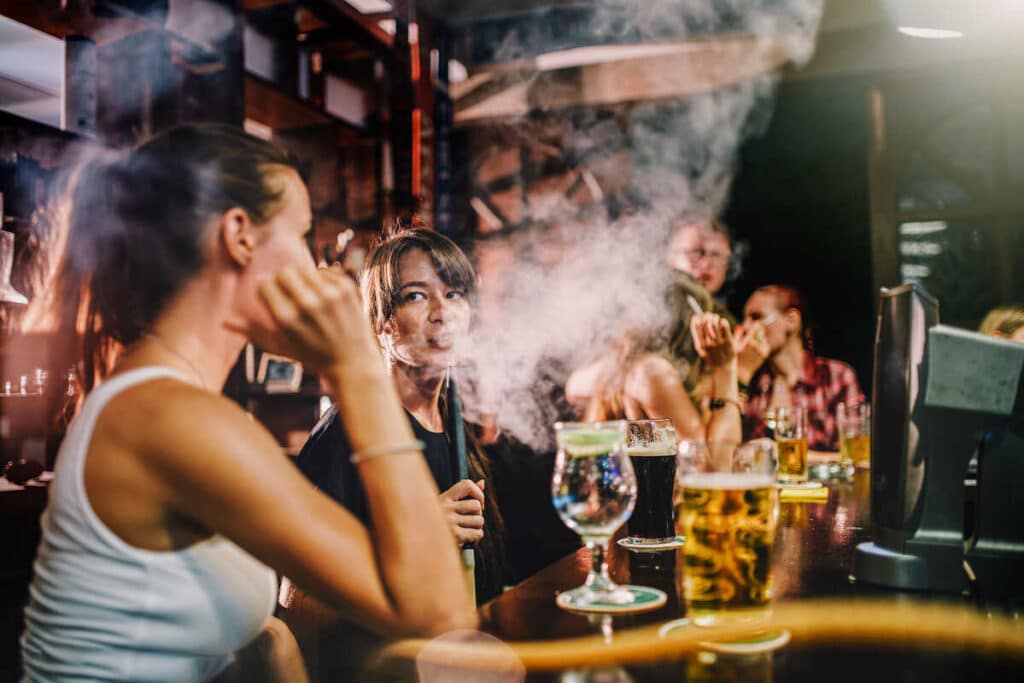
To give you the most direct answer, hotboxing is the practice of smoking in a small, unventilated, or sealed enclosure so that the smoke accumulates in a dense cloud, allowing everyone present to re-inhale it. The goal of this method is to maximize ambient smoke exposure while creating an intense, shared social environment.
The main characteristics that define this practice include:
-
Enclosed Spaces: The most common spots include parked cars, small bathrooms, tents, closets, or tiny rooms.
-
Lack of Ventilation: Doors and windows are temporarily sealed to keep fresh air from circulating and prevent the smoke from dissipating.
-
Social Phenomenon: Unlike smoking alone, hotboxing is almost always a group activity, turning a small space into a social hub centered around a shared experience.
Where does hotboxing come from? Cultural origin and meaning
While the term sounds like a modern piece of English slang, the habit of gathering smoke inside enclosed spaces for social or spiritual rituals dates back thousands of years. Ancient civilizations across Europe and Asia used sealed leather tents or timber structures over hot stones to inhale the vapors of aromatic plants during communal ceremonies.
The meaning and evolution of “hotboxing”
The term hotboxing comes from combining the words “hot” and “box” (a small, enclosed space). It literally refers to turning a room or vehicle into a “hot box” saturated with thick smoke and vapor. Over the decades, the term became firmly rooted in popular slang to describe trapping smoke in any unventilated space.
The impact of pop culture and cinema
The widespread mainstream surge of hotboxing occurred in the late 20th century through American popular culture:
-
Stoner Comedy Films: Cult films from the ’70s, ’80s, and ’90s (such as Cheech & Chong classics like Up in Smoke) popularized iconic comedy scenes where characters opened car doors, releasing massive white clouds of smoke.
-
The Urban Music Scene: The rise of ’90s hip-hop adopted hotboxing as a symbol of urban lifestyle, featuring it regularly in music videos, album covers, and lyrics.
-
Modern Social Media: In recent years, short-form video formats across digital platforms have brought the phenomenon back into fashion, turning the visual “cloud effect” into viral content.
Does hotboxing get you higher? What science says
There has always been a debate about whether hotboxing actually gets you higher or if it is simply a placebo effect caused by reduced oxygen levels. For years it remained an urban legend, but scientific research eventually put the practice to the test in laboratory settings.
A study conducted by Johns Hopkins University evaluated the impact of secondhand smoke in unventilated environments. The findings confirmed that it is possible to experience a stronger high from passive smoke, but only under extreme confinement and high smoke density.
The scientific explanation behind this phenomenon breaks down into three key factors:
-
Re-Inhaling Cannabinoids: Although your lungs absorb most active compounds during the initial drag, exhaled smoke still retains a fraction of active components. In a sealed room, those compounds are continuously re-inhaled through passive breathing.
-
CO₂ Saturation and Oxygen Deprivation: Much of the immediate lightheadedness or heavy feeling isn’t caused by cannabinoids alone, but by mild hypoxia (reduced oxygen supply to the brain) caused by breathing air heavy in carbon dioxide and carbon monoxide.
-
Unventilated vs. Ventilated Environments: The same studies proved that as soon as a window is opened or a fan is turned on, the concentration of active compounds in the air drops rapidly, and the passive secondhand effect disappears completely.
Important safety factors: Ventilation and enclosed spaces
While hotboxing can be a fun social ritual, subjecting your body to an environment lacking fresh oxygen for extended periods carries physiological and practical considerations.
Air quality and respiratory irritation
The main drawback of hotboxing is the fast degradation of air quality inside the space:
-
Eye and Airway Irritation: High concentrations of suspended particulate matter can cause itchy eyes, watering, coughing, and throat dryness.
-
Carbon Monoxide (CO) Accumulation: Continuous combustion in a closed room consumes available oxygen and elevates carbon monoxide levels. This can lead to headaches, heavy drowsiness, or nausea. If you experience any of these symptoms, open the space immediately to let fresh air in.
| Impact Area | Consequences | Solution / Prevention |
| Physical Well-being | Eye sting, throat irritation, lightheadedness | Limit session length; open windows immediately if dizzy |
| Vehicle / Room Upholstery | Deep odor trapping in fabrics and seats | Use air purifiers; avoid fabric-heavy spaces |
| Glass & Surfaces | Sticky resin/soot residue buildup | Thorough cleaning with glass cleaner or isopropyl alcohol |
Enjoying the ritual responsibly
Hotboxing is another example of how rolling culture creates its own social codes and ways to gather. However, as with any practice involving combustion, common sense and personal responsibility should always take priority.
If you decide to try it or revisit the experience with friends, keep your sessions short, make sure everyone in the group feels comfortable, and open the windows to circulate fresh air as soon as the atmosphere becomes too dense. Looking after your space and your crew is the best way to ensure every session remains safe, comfortable, and enjoyable.